Paper vs Computer-Delivered IELTS: What Changes for You
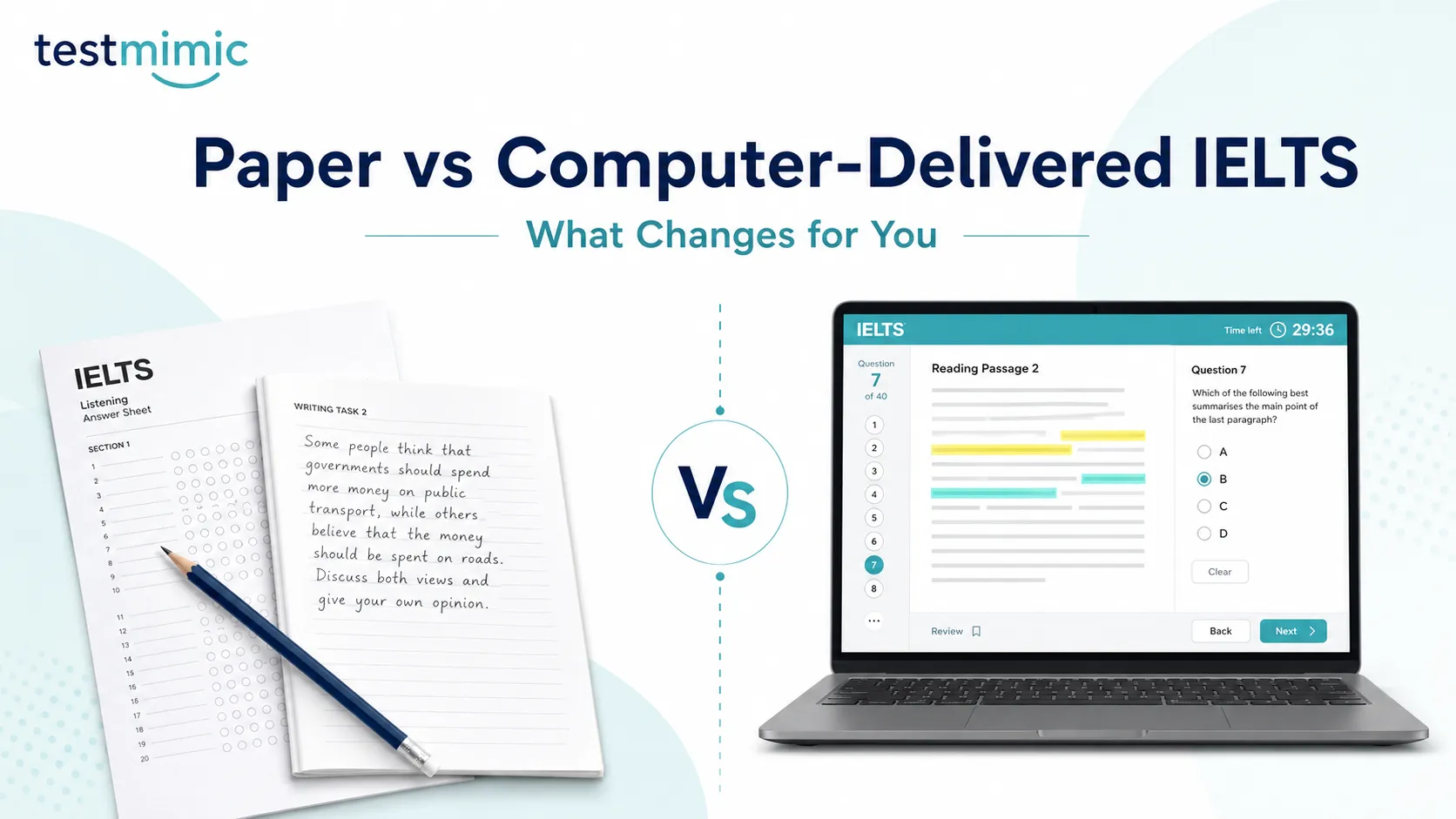
Now that paper-based IELTS has been discontinued in most of the world, the comparison between the two formats is no longer about choosing; it is about understanding what is different so you can adapt. Millions of test-takers prepared for years using paper materials. If that is you, this guide maps every meaningful difference between the format you practised and the format you will actually face.
The short version: the questions are identical, the scoring is identical, but the experience is substantially different, and the differences reward specific preparation.
The quick comparison
Feature | Paper-based IELTS (discontinued) | Computer-delivered IELTS |
Listening answers | Written in booklet, then 10 minutes to transfer to answer sheet | Typed directly on screen; only a short check time, no transfer period |
Reading | Printed passages; underline and annotate with pencil | On-screen passages; digital highlighter and notes panel |
Writing | Handwritten essays | Typed essays with cut, copy, paste, and live word count |
Speaking | Face-to-face with examiner | Face-to-face with examiner, unchanged |
Timer | Wall clock / invigilator announcements | On-screen countdown timer, always visible |
Results | ~13 days | Typically 1???5 days |
Test dates | Limited sessions | Multiple sessions per week at most centres |
Scoring | Band 1???9, same criteria | Band 1???9, same criteria, identical |
Listening: the biggest hidden change
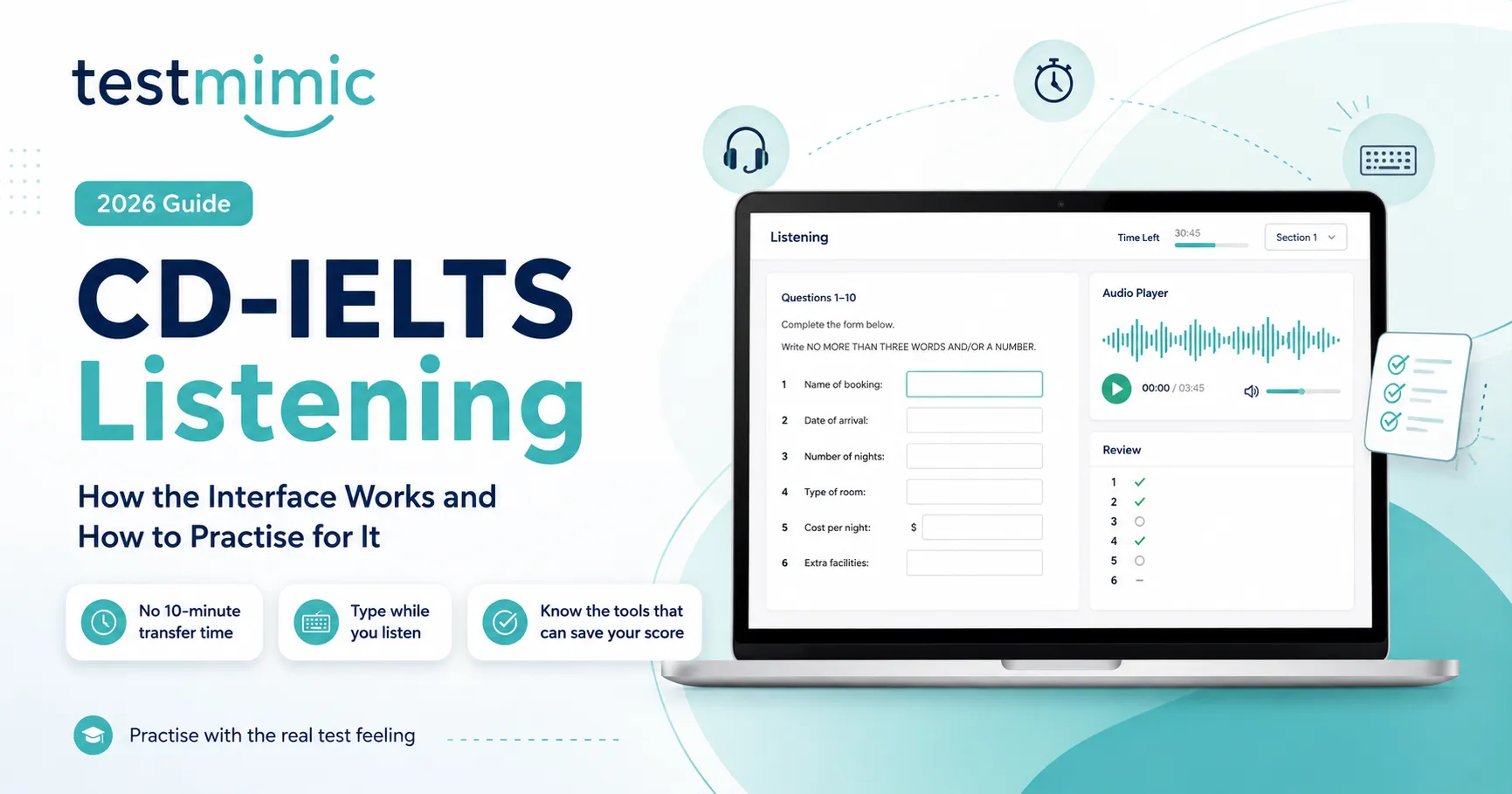
On paper, you listened, scribbled answers in your question booklet, and then received ten full minutes at the end to transfer everything neatly to an answer sheet. Many candidates used that window to fix spelling, reconsider answers, and tidy up.
On computer, that transfer window is gone. You type your answers directly as you listen, and you get only a couple of minutes at the end to review. If your preparation strategy relied on the transfer period as a safety net, you no longer have it. Spelling now has to be right the first time, while the audio is still playing.
The compensation: typing an answer is faster than writing one, and you can correct a typo instantly rather than erasing pencil marks. Candidates who practise answering on screen consistently report the format feels natural within two or three mock tests. Our dedicated guide to the CD-IELTS Listening interface walks through the screen layout and the exact strategy adjustments to make.
Reading: from pencil to highlighter
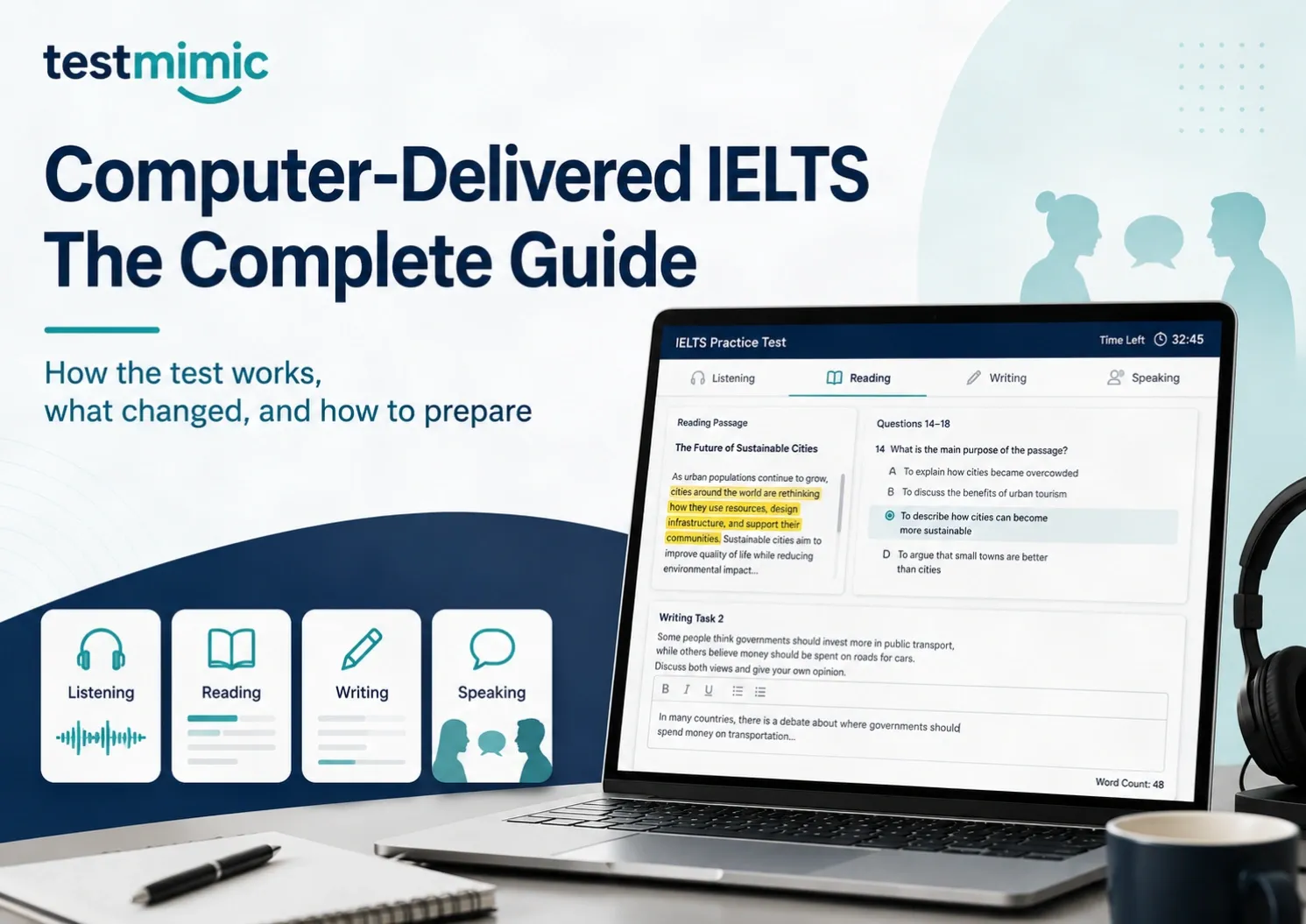
Paper Reading rewarded physical annotation, underlining keywords, circling names, scribbling margin notes. On computer, the same behaviours exist but through different tools: a right-click highlighter and a notes feature attached to selected text.
Two things trip up former paper-preppers:
Scanning feels different on screen. Your eyes track a scrolling passage differently from a printed page. Skimming speed typically dips for the first few practice sessions, then recovers and often improves, because you can navigate directly between questions and passage sections with clicks instead of page-flipping.
The tools have to become automatic. If you are consciously thinking about how to highlight during the real test, you are losing seconds on every question. Sixty minutes disappears fast.
We cover the specific navigation and annotation tricks in CD-IELTS Reading: Highlighting, Notes, and Navigation.
Writing: typing is now a scored skill (indirectly)
Nothing in the scoring criteria mentions typing. But in practice, your typing ability decides how much of your 60 minutes goes to thinking versus producing text.
Handwriting an essay and typing one are different physical skills:
If you type slowly (under ~25 words per minute), you will struggle to produce 250+ words for Task 2 with enough time left to plan and review.
If you type comfortably (30+ wpm), the computer format is a clear upgrade: you can restructure paragraphs, insert sentences, and fix errors in seconds, editing that was messy or impossible with a pen.
Word count is live. No more counting lines and estimating. You know exactly where you stand at all times.
For candidates in markets where the optional "Writing on Paper" mode is offered, handwriting remains possible for this one section, but availability is limited and it is not offered for UKVI tests. For everyone else, typing fluency is now part of test readiness.
Speaking: nothing changed
The Speaking test remains a live, face-to-face interview with a trained examiner, in all markets, in all formats. Same three parts, same 11???14 minutes, same criteria. If Speaking is your strongest section, that strength carries over untouched.
Results, dates, and logistics
The practical advantages of the computer format are real:
Results in 1???5 days instead of roughly two weeks, meaningful if you are racing a university application deadline or a visa timeline.
More test dates, often several per week, making it easier to book, and easier to re-book quickly if you need another attempt.
One Skill Retake remains available, letting you redo a single section instead of the whole test.
So which format was "better"?
For most candidates, honestly, the computer format, faster results, editing tools in Writing, cleaner navigation. The genuine disadvantages (no transfer time in Listening, typing dependency in Writing, screen reading fatigue) are all trainable within a few weeks of format-specific practice.
The candidates who struggle are almost always the ones who prepared on paper and met the screen for the first time on test day. Format familiarity is now a component of your band score, whether the rubric says so or not.
The one-step fix
Every difference described in this guide disappears as a threat the moment you have taken two or three full mock tests in the real on-screen format. TestMimic's mock tests replicate the computer-delivered IELTS interface, the timer, the highlighter, the typing environment, the no-transfer Listening flow, with real feedback on your performance. Take a free computer-delivered mock test and experience every difference on this page before it costs you marks.
Frequently asked questions
Are the questions different on computer-delivered IELTS? No. Question types, sections, difficulty, and the Academic/General Training split are identical. Only the delivery medium changed.
Is the scoring different on computer? No. The same 1???9 band scale and the same assessment criteria apply. Examiners assess typed Writing exactly as they assessed handwritten Writing.
Do I still get 10 minutes to transfer Listening answers? No. On computer you answer directly on screen and receive only a short review window, there is no transfer period. This is the single biggest practical difference from paper.
Is Speaking done on a computer now? No. Speaking remains a face-to-face interview with a human examiner in every market.
Can I still choose the paper test? No, paper-based IELTS was discontinued in most markets after 27 June 2026. A "Writing on Paper" option exists in selected locations for the Writing section only. See our full explainer on the paper test discontinuation.
How should I change my preparation? Move all practice on screen immediately, benchmark your typing speed, and take full-length computer-delivered mock tests so the interface is automatic before test day.