Is Paper-Based IELTS Discontinued? Everything Test-Takers Need to Know (2026)
Last updated: July 2026
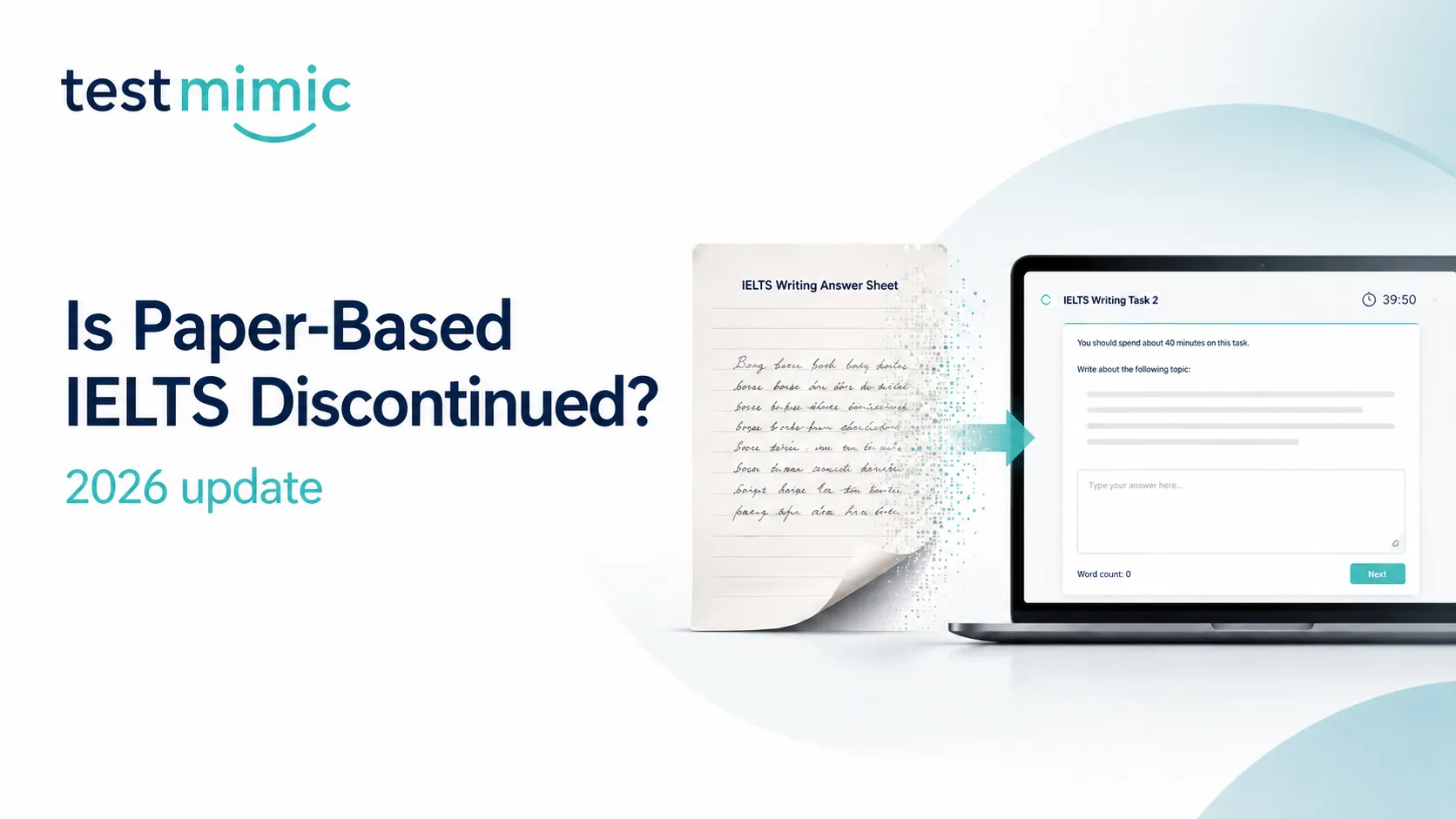
YES, paper-based IELTS has been discontinued. In most countries, 27 June 2026 was the final date you could sit IELTS with a pencil and an answer sheet. From mid-2026 onward, all IELTS tests are delivered on computer, a decision announced jointly by the three IELTS partners: the British Council, IDP Education, and Cambridge University Press & Assessment.
If you have been preparing with printed practice booklets and handwritten essays, this change directly affects your test day. This guide explains exactly what has changed, what stays the same, and what you should do next.
What the IELTS partners announced
In March 2026, the IELTS partners confirmed that after a careful review, IELTS would no longer be offered as a paper-based test from mid-2026. All IELTS tests, Listening, Reading, and Writing, are now taken on a computer at an official test centre.
The reasons given were practical: test-takers who chose the computer format reported higher satisfaction, results arrive far faster (typically 1???5 days instead of around 13 days for paper), and computer testing allows many more test dates per week.
Exact timelines vary slightly by market, so the transition did not happen on a single day everywhere. Some countries moved earlier, Vietnam, for example, discontinued paper-based IELTS back in March 2025. But for the vast majority of test-takers worldwide, including in Bangladesh, India, Nepal, and Pakistan, 27 June 2026 marked the end of the paper era.
What stays exactly the same
This is the most important thing to understand: the test itself has not changed. Only the surface you take it on has.
The question types are identical. Academic and General Training both continue to exist, with the same sections and the same kinds of tasks.
The band scale is unchanged. You are still scored from 1 to 9, in half-band increments, against the same criteria examiners have always used.
The Speaking test is still face-to-face. You will still sit across from a human examiner for an 11???14 minute interview. Nothing about Speaking has moved to a screen.
Score recognition is unaffected. Universities, immigration authorities, and professional bodies interpret your result exactly as before.
Existing paper-based results remain valid for the standard two-year period. If you took a paper test before the cutoff, your score is not affected in any way.
What actually changes for you
Everything about how you interact with the test is different:
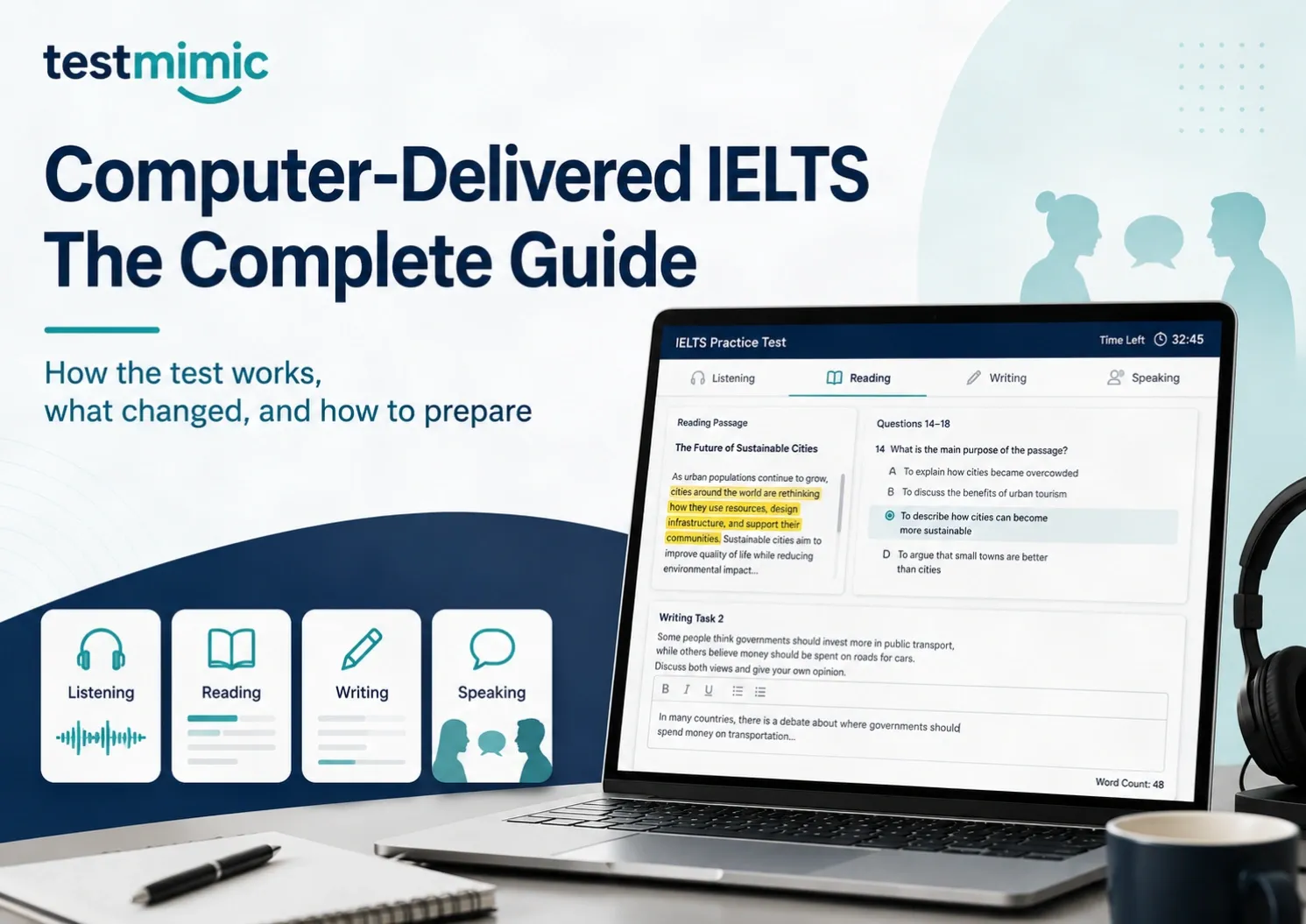
Reading: passages appear on screen. Instead of underlining with a pencil, you use an on-screen highlighter and notes feature.
Writing: you type your essays instead of handwriting them. Your typing speed and accuracy now directly affect how much you can produce in 60 minutes.
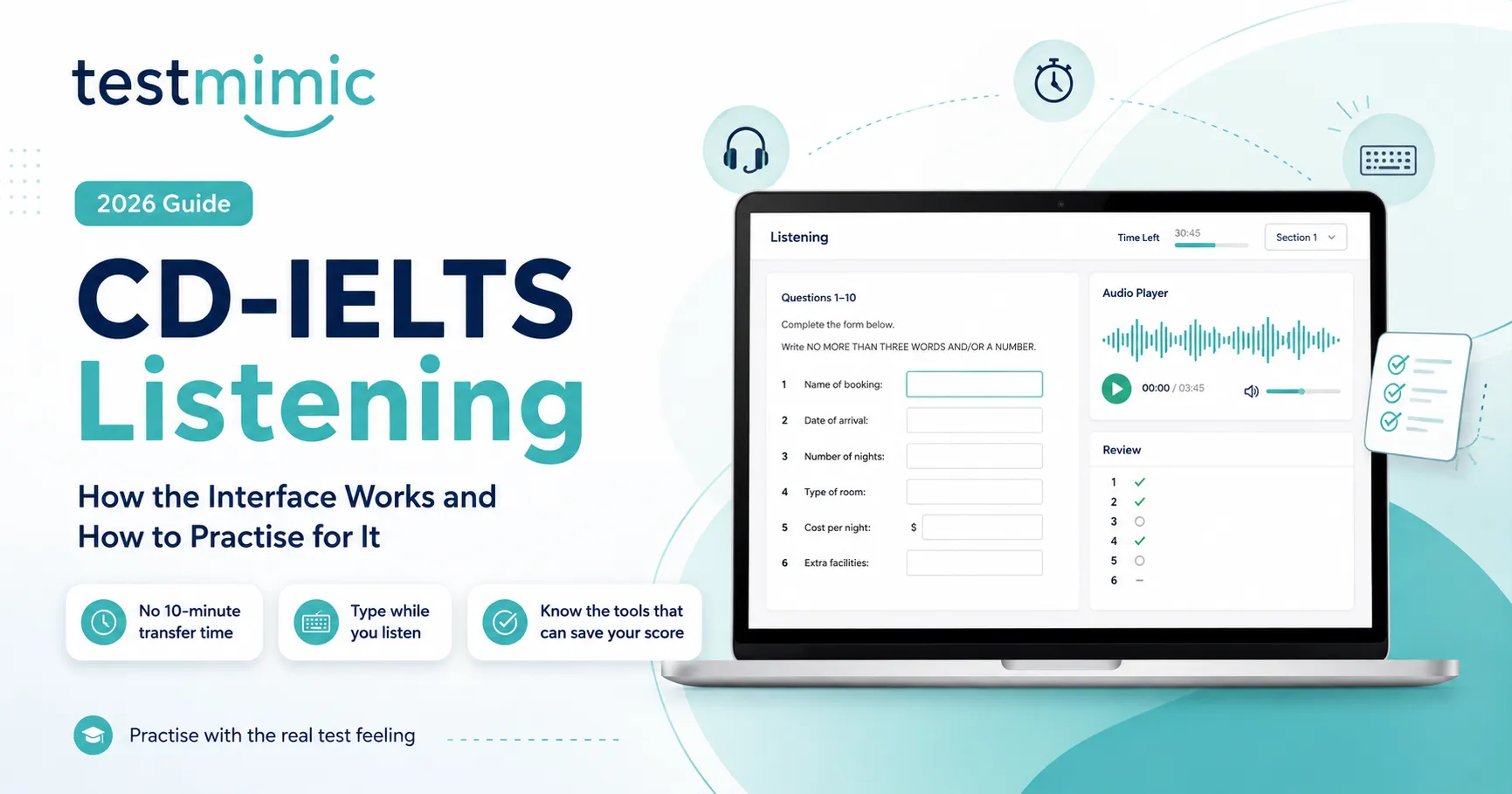
Listening: you answer as you listen, on screen. Critically, the 10 minutes you used to get at the end to transfer answers to a paper sheet no longer exists, you get only a short check time instead. This single difference catches out more former paper-preppers than anything else.
Navigation: you click between questions and sections rather than flipping pages, with an on-screen timer always visible.
For a full side-by-side breakdown, read our comparison:
The "Writing on Paper" option, what it is and what it is not
Recognising that some candidates strongly prefer handwriting, the IELTS partners are introducing an option called Writing on Paper in selected markets. Here is what you need to know:
It applies to the Writing section only. Listening and Reading are still taken on computer.
It is available in selected locations only, not everywhere, and rollout details are still being confirmed market by market. Do not assume your local centre offers it; check when you book.
Research by the IELTS partners found scores from Writing on Paper are fully comparable to typed Writing scores.
If you use One Skill Retake after choosing Writing on Paper, your retake must be in the same mode, handwritten, not typed.
Important exception: the Secure English Language Test (SELT) used for UK Visas & Immigration is available only in the fully digital format. If you are taking IELTS for a UK visa, Writing on Paper is not an option for you.
In short: Writing on Paper is a comfort option for one section, not a continuation of the paper test.
What you should do now
Stop practising on paper. Every hour spent with printed booklets builds habits, underlining, handwriting pace, answer-sheet transfer, that no longer match the real exam.
Learn the interface before test day. The highlighter, the notes panel, the review screen, the timer, none of these should be new to you when your band score is on the line.
Check your typing speed. If you cannot comfortably type 25???30 words per minute, Writing Task 2 will feel rushed.
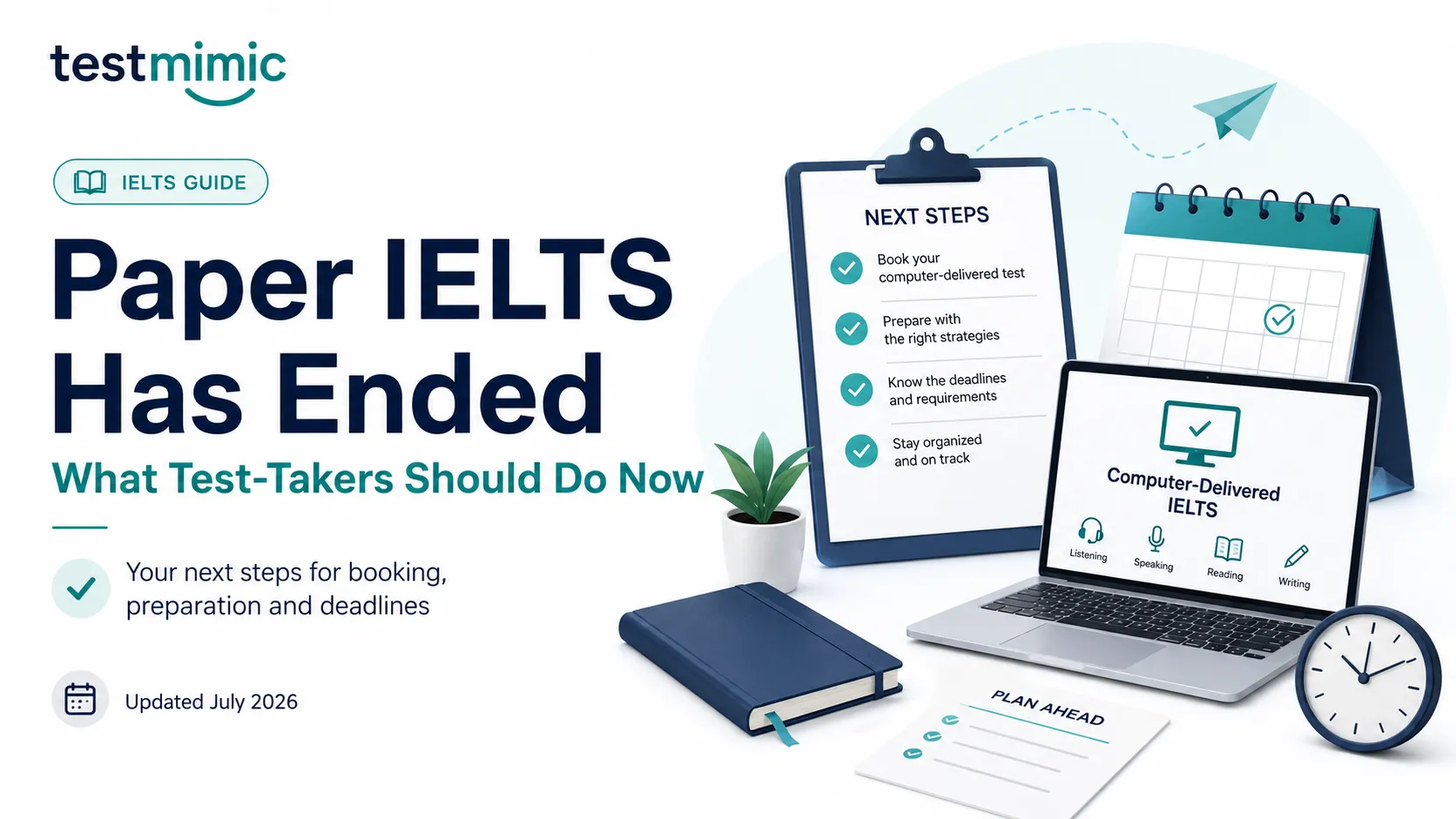
The single most effective step is to take a full-length mock test in the same on-screen format as the real exam. TestMimic's computer-delivered IELTS mock tests replicate the real test interface: the timer, the navigation, the highlighter, the typing environment, so the only surprise on test day is your questions, not your screen. Take a free computer-delivered mock test and see where your band stands in the format that now counts.
Frequently asked questions
Is paper-based IELTS completely discontinued? Yes. From mid-2026, IELTS is delivered on computer only, with 27 June 2026 as the final paper test date in most markets. A limited "Writing on Paper" option exists in selected locations for the Writing section only.
When was the last paper-based IELTS test? In most countries, 27 June 2026. Some markets transitioned earlier Vietnam ended paper testing in March 2025. Exact dates varied by country and test centre.
Is my old paper-based IELTS score still valid? Yes. Results from paper-based tests remain valid for the standard two-year period and are recognised exactly as before.
Is computer-delivered IELTS harder than paper? The content, question types, and scoring are identical. Difficulty depends on your familiarity with the format, candidates who practise on screen typically perform at the same level or better, helped by editing tools and clear timing.
Can I still handwrite my IELTS Writing answers? Only in selected markets offering the "Writing on Paper" option, and only for the Writing section. It is not available for UKVI (SELT) tests, which are fully digital. Check with your local test centre when booking.
How fast do computer-delivered IELTS results come? Typically within 1???5 days, compared with roughly 13 days for the old paper-based test.